Jelly Force Official Website › Blog › Eighty-Two Milligrams, Nine Names
Eighty-Two Milligrams, Nine Names: How To Read A Proprietary Blend
Most blended supplements print a list of names and a single total. This bottle prints a total, a second number explaining what the first one means, and one amount inside the blend. Reading those three figures properly takes about two minutes, and it will tell you more about any botanical product than the whole front of the label.
Three numbers, and what each one is
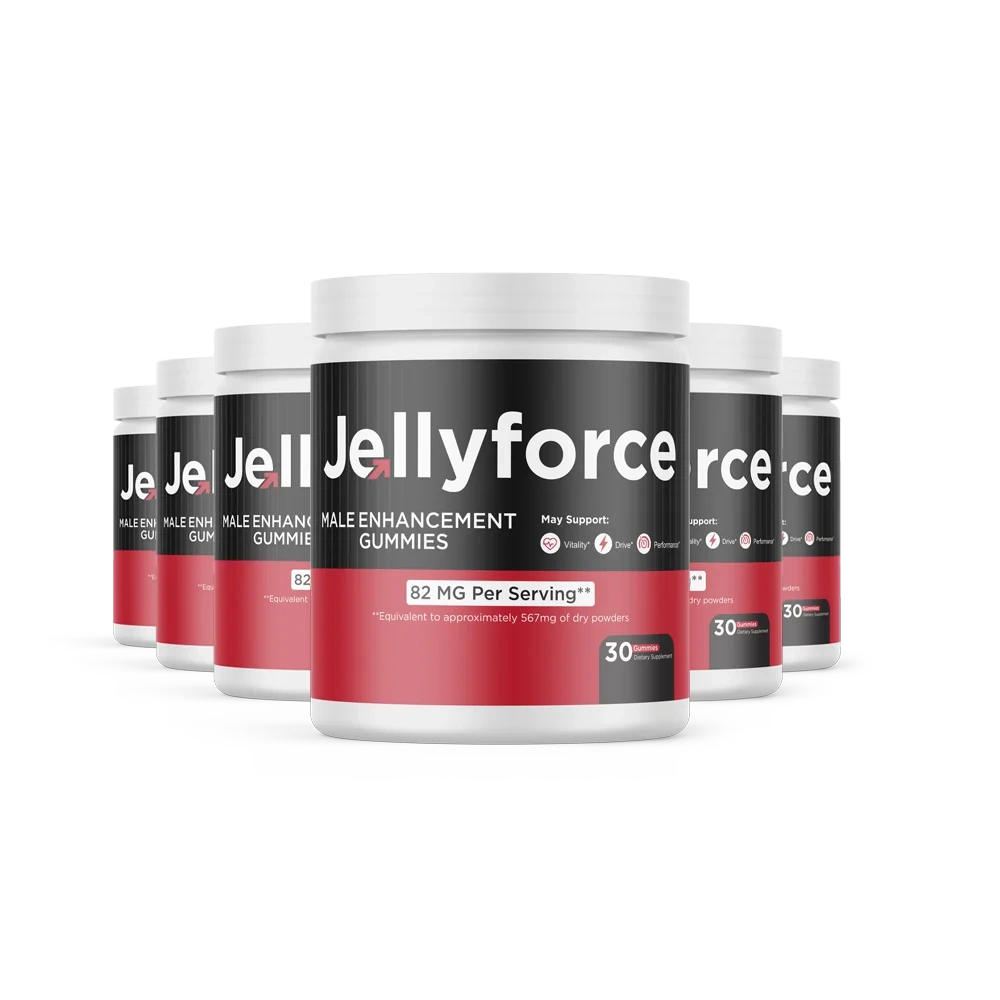
The front of the Jelly Force bottle carries a single quantity. Across the crimson band, in the largest type on the label after the wordmark, it says 82 MG Per Serving, with a footnote beneath: equivalent to approximately 567 mg of dry powders.
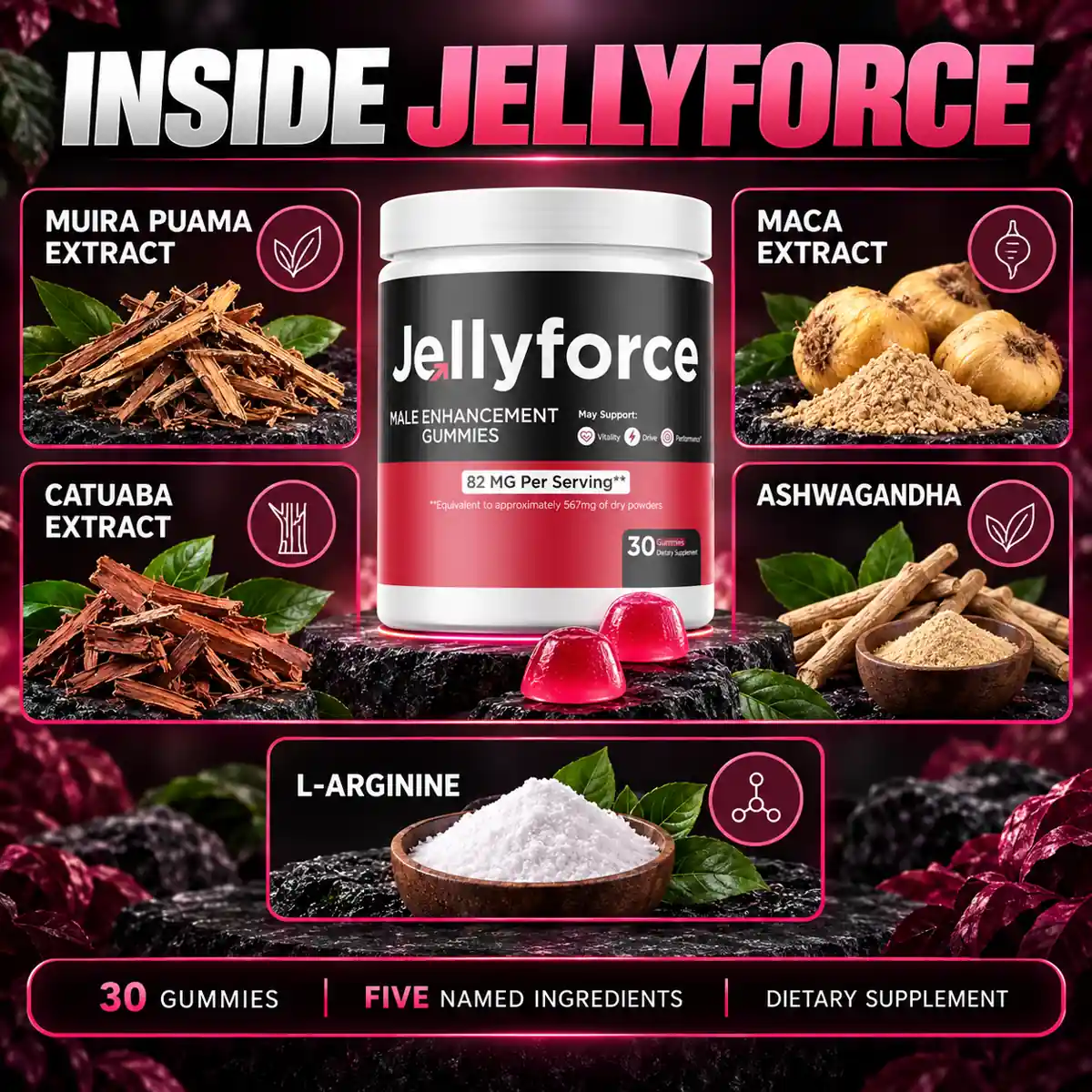
Turn the bottle round and the Supplement Facts panel explains the 82 mg. It is a Proprietary Blend, the same footnote hangs off it, and nine names sit underneath it: muira puama, maca, catuaba, green tea extract, caffeine, ashwagandha, L-arginine, tribulus and horny goat weed. One of them carries its own figure. Caffeine is printed as 5 mg.
That is more than a lot of this shelf gives you: plenty of blended products print names and the word proprietary with no weight at all.
What it has not given you is how the other eight names divide the remaining 77 mg. A fair amount can still be concluded honestly from what is printed, and there is a clear line where the printed figures stop.
What an extract ratio actually is
The two blend numbers on this label describe the same material at two stages of its life. 567 mg is the raw side: dried root, bark and leaf, weighed before anything is done to it. 82 mg is what is left after extraction.
Extraction is a soaking and a concentration. A manufacturer takes the dried plant, pulls out the soluble fraction with water or alcohol, discards the fibre and the insoluble bulk, and dries what remains. The powder that comes out weighs far less and carries a larger share of whatever the plant's active chemistry is.
Divide one by the other and you get roughly seven to one. That is an ordinary strength for a botanical extract, neither impressive nor suspicious. What it means practically is that one gummy carries the extractable fraction of about 567 mg of mixed dried material, and that is the more generous of the two figures when you come to compare it with anything. Caffeine is the exception: a single compound, so its 5 mg is a plain weight.
- What the extracts are standardised to. A good botanical extract names a marker compound and a percentage. This panel names neither, so seven-to-one describes weight rather than potency.
- Which solvent was used. Water and alcohol pull different things out of the same root, and for some plants the difference matters.
- How the nine inputs were divided. That is the next section, and it is the one where the arithmetic stops and the guessing would start.
What happens when one number has to cover nine names
A single total across several ingredients is an upper bound on each of them, and nothing more. No name on that panel can exceed 82 mg, because that is all there is, and once the caffeine's 5 mg is taken out no other name can exceed 77 mg.
It is tempting to divide by nine and print the result. It is also wrong, and worth explaining why. Blends are almost never even. The cheapest and bulkiest input usually carries most of the weight, because that is what makes a formula affordable, and the ingredient the marketing leads on is often present in a small quantity. An even split is not a conservative estimate; it is an assumption dressed up as one.
So the honest reading of a blend is a range for each name. For most proprietary blends that range runs from almost nothing to the whole total. On this panel, as the next section shows, the order of the names narrows it a good deal.
| What you can say | What you cannot say | Why |
|---|---|---|
| The nine together are 82 mg | Any single one, bar caffeine, is a specific amount | The panel prints a total and one division |
| Caffeine is 5 mg | The caffeine comes from the green tea | It is listed as its own entry and the panel says no more |
| That is about 567 mg of dry-powder equivalent | That the extracts are standardised to anything | No marker compound or percentage appears anywhere |
| If the rule is followed, the last four weigh 5 mg or less each | Each of them is a known amount | The rule fixes the order, not the amounts |
| The total is far below every trial dose | The product therefore does nothing | An untested blend is untested in both directions |
The middle column is what a careless page prints. The right-hand column is why.
The order of the names is a clue
On a seller's graphic, the order of the names is a design choice. On a Supplement Facts panel it is not. The federal rule for proprietary blends requires the ingredients inside one to be declared in descending order of predominance by weight: heaviest first, lightest last.
Put that beside the one amount the panel prints. Caffeine sits fifth, at 5 mg. If this panel follows the rule, then muira puama, maca, catuaba and green tea extract, printed above it, weigh at least 5 mg each. And ashwagandha, L-arginine, tribulus and horny goat weed, printed below it, weigh 5 mg or less each.
That is worth a second look, because the four names below the caffeine include three of the four on this bottle with positive controlled trials: ashwagandha, arginine and tribulus. Maca, second, is the exception. For most of the panel, the weight of the blend and the weight of the evidence run in opposite directions.
Two cautions keep that reading honest. It is only as good as the label's compliance with the rule, and nobody has assayed this gummy to check. So it is a ceiling read from the printed order, not a measurement, and it should never be quoted as one.
Read the Jelly Force panel with the arithmetic in front of you
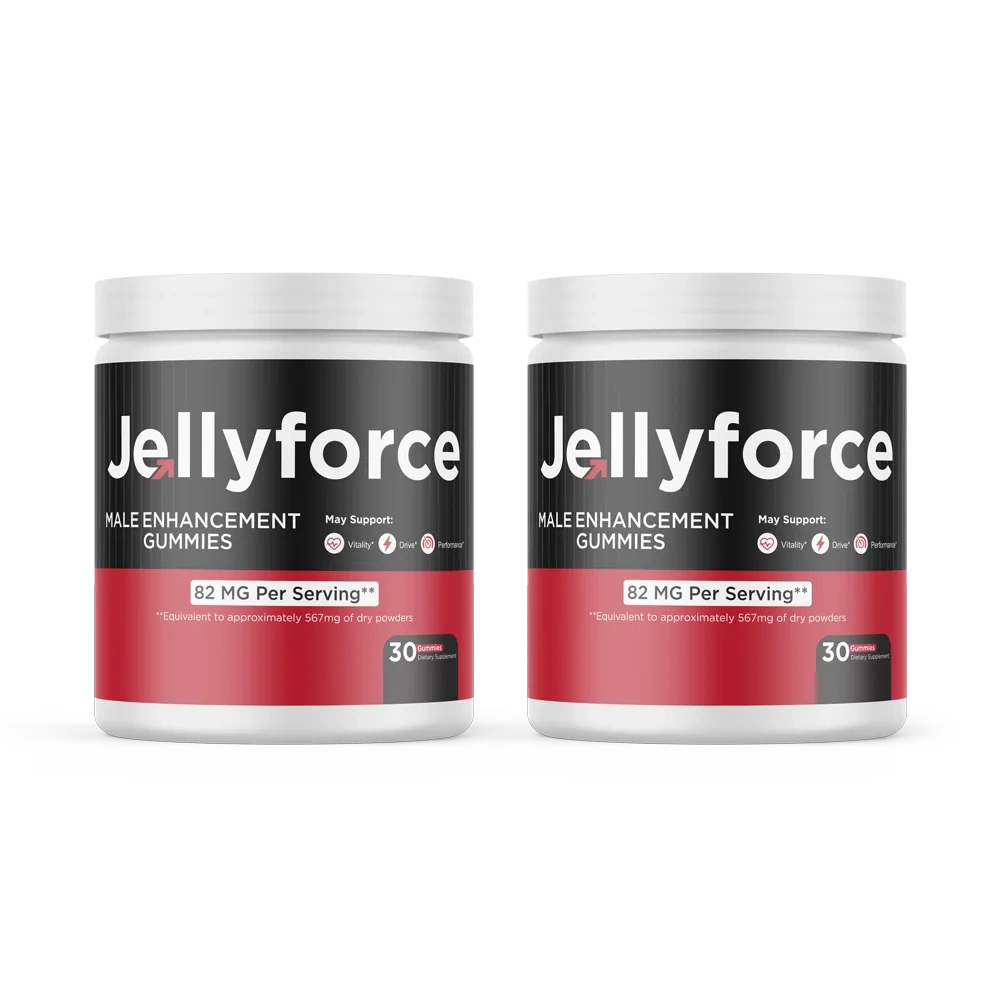
Nine names, 82 mg between them, 5 mg of it caffeine, and a dry-powder footnote that much of this category does not bother to print. Two bottles is sixty days inside a sixty-day window, which is long enough to decide what it is worth to you.
From $158 for two bottles to $294 for six, with 60 days on all three
Choose A Jelly Force PackChewed, one a day, 30 to a bottle. Batch JEL-26/JE-2800, shipped from the United States.
The amounts the research actually used
Every positive result behind the names on this bottle was bought with a specific daily dose, and the doses are large. This is where the comparison becomes uncomfortable, so it is worth being precise rather than rhetorical about it.
| Ingredient | Trial dose a day | What the trial measured |
|---|---|---|
| Maca | 1,500 to 3,000 mg | self-reported sexual desire over twelve weeks |
| Maca, mild erectile dysfunction | 2,400 mg | erectile questionnaire scores over twelve weeks |
| Ashwagandha root extract | 675 mg | semen parameters over ninety days |
| L-arginine | 1,500 to 5,000 mg | erectile scores, pooled across ten randomised trials |
| Tribulus, standardised extract | 1,500 mg | erectile scores over twelve weeks in 180 men |
| Muira puama | No controlled human trial | — |
| Catuaba | No controlled human trial | — |
Every figure in the middle column was read from the trial record rather than recalled. The lowest of them is 675 mg of one ingredient.
Set those against a bottle delivering an 82 mg blend, about 567 mg dry-powder equivalent, across all nine names. Even the most generous reading — the whole 567 mg being a single ingredient, which it is not — would not reach the ashwagandha dose, let alone the maca, arginine or tribulus ones. If the order rule holds, the ashwagandha, arginine and tribulus are each 5 mg or less.
That gap is not unique to this product, and it is not a scandal. It is close to the definition of a blended botanical supplement in a chewable format. An audit published in Nutrients in 2023 scored marketed erectile-dysfunction supplements against the minimum effective daily dose of each of their own named ingredients, across a whole market, and almost none of the products examined cleared it.
What would be unfair to conclude from all of this
Three things, and they matter because the arithmetic above is easy to over-read.
It does not follow that nothing happens. An untested product is untested in both directions, and the honest position is that nobody has measured this gummy. What follows is that anyone buying it on the strength of the maca trials is buying a name rather than a dose, and is entitled to know that before paying.
It does not follow that the panel is hiding something. A blend weight, a dry-powder equivalent and a caffeine figure are more disclosure than much of the shelf offers. The shortfall on this bottle is in the advertising, which names five of the nine.
And it does not follow that a smaller number is a worse product for every buyer. The thing a gummy does better than a capsule is get taken, and a supplement nobody takes delivers zero milligrams of everything.
- What is certain: an 82 mg blend a serving, about 567 mg dry-powder equivalent, nine names, 5 mg of caffeine.
- What the order implies: if the rule is followed, the four names below the caffeine weigh 5 mg or less each.
- What is unknown: how the other 77 mg divide, the standardisation, and what the finished gummy contains when assayed.
- What is unknowable from the label alone: whether any of it matters at this scale.
How to read any blended label in ninety seconds
The method works on any botanical product, not just this one.
- Find the quantity, if there is one. A total, a blend weight, or nothing. If there is nothing, you are comparing names rather than products.
- Look for a second number. A dry-powder equivalent or an extract ratio tells you which side of the extraction the first number describes.
- Count the names sharing it, and read their order. Divide nothing. On a US panel the names in a blend run heaviest first, so a name near the bottom of a long list is a small share of it.
- Look for any single amount inside the blend. One printed figure, like the caffeine here, fixes a point on that heaviest-first list.
- Compare the panel with the advertising. They do not always name the same ingredients, and the panel is the regulated one.
- Look up two ingredients, not all of them. Pick the two the marketing leads on and find the dose their trials used. Two lookups settle most products.
- Then decide what you are buying. A dose, or a habit. Both are legitimate purchases and they are not the same purchase.
A blend that prints one number is telling you a ceiling, not a dose. Read it as a ceiling, read the order, look up two of the names, and you will know more about the bottle than the front of the label intends.
Everything above is applied to this specific bottle on the label panel page, and each of the nine names is taken apart with its own trial record on the ingredients page.
Jelly Force is a dietary supplement, not a treatment for anything. A change in erectile function that arrives suddenly, or arrives alongside chest pain or leg pain on walking, can be the first visible sign of a vascular problem, and it is a reason to make an appointment rather than to start a gummy. The NIDDK page on erectile dysfunction sets out plainly what is treatable and how, and it takes about four minutes to read.
References
- Code of Federal Regulations, Title 21, section 101.36(c)(2): the dietary ingredients in a proprietary blend are declared in descending order of predominance by weight. Legal Information Institute, Cornell Law School. https://www.law.cornell.edu/cfr/text/21/101.36
- Gonzales GF, Cordova A, Vega K, et al. Effect of Lepidium meyenii (MACA) on sexual desire and its absent relationship with serum testosterone levels in adult healthy men. Andrologia. 2002;34(6):367-72. Men aged 21-56 took 1,500 mg or 3,000 mg a day for twelve weeks; desire improved from week eight and testosterone did not move. PMID 12472620. https://pubmed.ncbi.nlm.nih.gov/12472620/
- Ambiye VR, Langade D, Dongre S, et al. Clinical Evaluation of the Spermatogenic Activity of the Root Extract of Ashwagandha (Withania somnifera) in Oligospermic Males: A Pilot Study. Evid Based Complement Alternat Med. 2013;2013:571420. Forty-six men, 675 mg a day in three doses for ninety days. PMID 24371462. https://pubmed.ncbi.nlm.nih.gov/24371462/
- Rhim HC, Kim MS, Park YJ, et al. The Potential Role of Arginine Supplements on Erectile Dysfunction: A Systemic Review and Meta-Analysis. J Sex Med. 2019;16(2):223-234. Ten randomised trials, 540 men with mild to moderate erectile dysfunction, doses of 1,500 to 5,000 mg a day. PMID 30770070. https://pubmed.ncbi.nlm.nih.gov/30770070/
- Kamenov Z, Fileva S, Kalinov K, Jannini EA. Evaluation of the efficacy and safety of Tribulus terrestris in male sexual dysfunction-A prospective, randomized, double-blind, placebo-controlled clinical trial. Maturitas. 2017;99:20-26. 180 men with mild or moderate erectile dysfunction, two 250 mg tablets of a standardised extract three times a day (1,500 mg) for twelve weeks. PMID 28364864. https://pubmed.ncbi.nlm.nih.gov/28364864/
- Petre GC, Francini-Pesenti F, Vitagliano A, et al. Dietary Supplements for Erectile Dysfunction: Analysis of Marketed Products, Systematic Review, Meta-Analysis and Rational Use. Nutrients. 2023;15(17):3677. Marketed blends were scored against the minimum effective daily dose of each ingredient; two of the products examined cleared it. PMID 37686709. https://pubmed.ncbi.nlm.nih.gov/37686709/