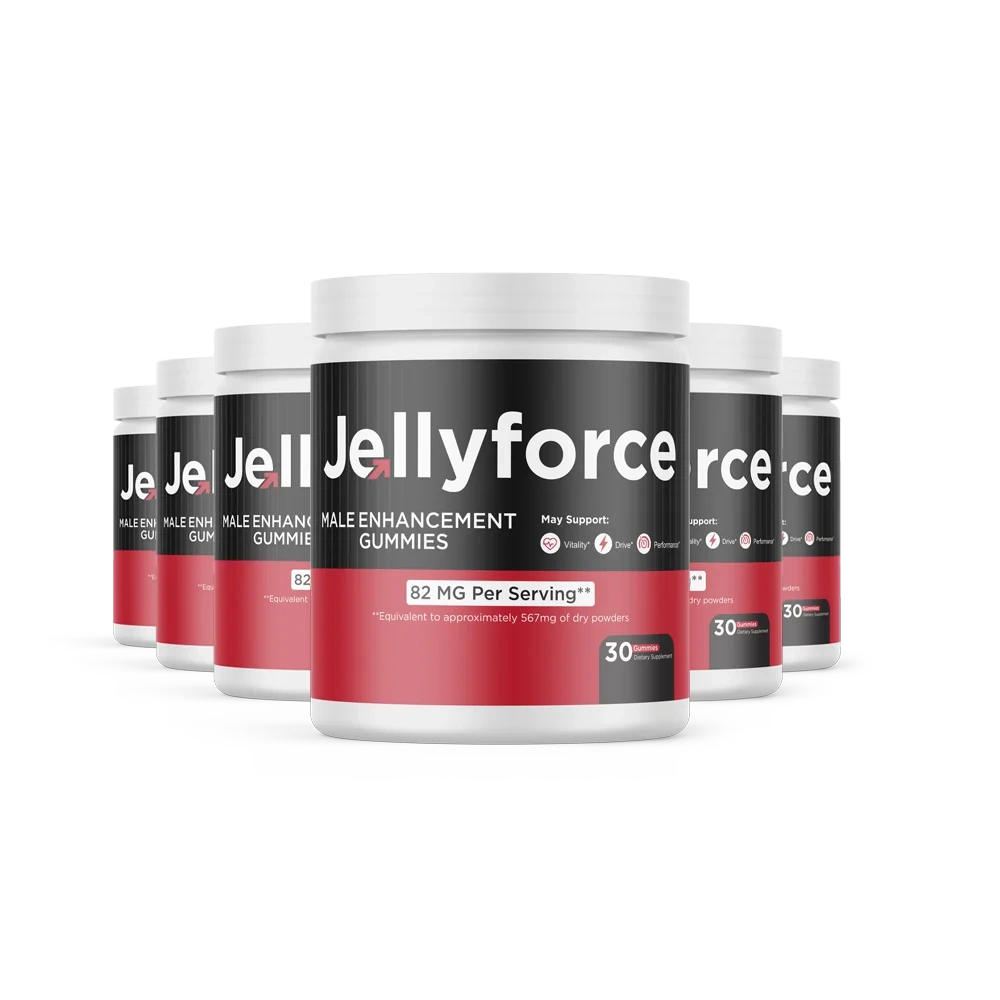
Jelly Force Official Website › Blog › Maca Did Not Raise Testosterone
Maca Improved Desire And Left Testosterone Alone. That Is The Interesting Part.
The best-evidenced botanical on this label is also the most misdescribed one. A twelve-week trial found maca improved self-reported sexual desire, measured testosterone in the same men, and found it had not moved at all. Almost every page selling maca gets that backwards.
What maca is, before anything else
Maca is Lepidium meyenii, a cruciferous root grown above four thousand metres on the Peruvian altiplano, where very little else survives. It is a relative of the radish and the turnip, it is eaten there as a food rather than taken as a medicine, and it has been cultivated for a very long time.
That food history matters for two reasons. It is the most reassuring safety record of any botanical on this bottle, because populations have eaten it in quantity for generations. And it sets the scale of an ordinary dose: people eat maca by the spoonful, not by the milligram, which is worth remembering when a supplement label puts it in a blend.
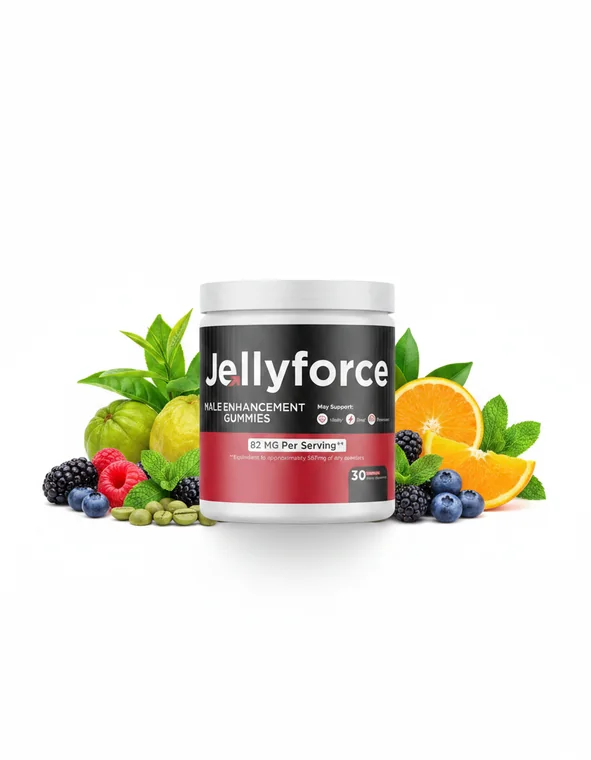
On the Jelly Force Supplement Facts panel it is the second name of nine, and it carries more controlled human evidence on sexual desire than any other name there.
The trial that made its reputation
The study most often cited ran for twelve weeks, blinded on both sides and placebo-controlled, in men between twenty-one and fifty-six. Three arms: gelatinised maca at 1,500 mg a day, the same at 3,000 mg, and placebo. Everyone was assessed three times, at four weeks, eight weeks and twelve.
Self-reported sexual desire improved in the maca groups from week eight onwards. The authors then did something unusual and useful: they ran a logistic regression to check whether the change could be explained by mood, and measured depression and anxiety scores alongside. It could not. The effect on desire was independent of both.
It is a small trial with a self-reported outcome, which is the ordinary limitation of this entire field. It is also properly randomised, properly blinded and placebo-controlled, which puts it well ahead of most of the botanicals it shares a shelf with.
The result almost every page leaves out
In the same men, in the same trial, the researchers measured serum testosterone and oestradiol. Neither differed from placebo.
That sentence is in the paper's own title, and it is the single most useful fact about maca available anywhere: whatever maca does, it does not do it by raising testosterone. The trial was specifically designed to find out, and the answer was no.
This matters commercially because raises testosterone is the most common claim printed on products containing maca, and the trial usually cited to support it is the one that measured testosterone and found no change. A claim and its own citation pointing in opposite directions is not a subtle error, and it is remarkably widespread.
| What the trial found | What is often claimed | Verdict |
|---|---|---|
| Desire improved from week eight | Desire improved | Supported |
| Serum testosterone did not change | Testosterone increased | Contradicted |
| Oestradiol did not change | Hormones rebalanced | Contradicted |
| Effect independent of mood scores | It works by lifting mood | Ruled out |
| 1,500 to 3,000 mg a day for twelve weeks | Any amount, any duration | Not supported |
Every row in the left-hand column comes from the trial record itself, read through the NCBI interface rather than recalled.
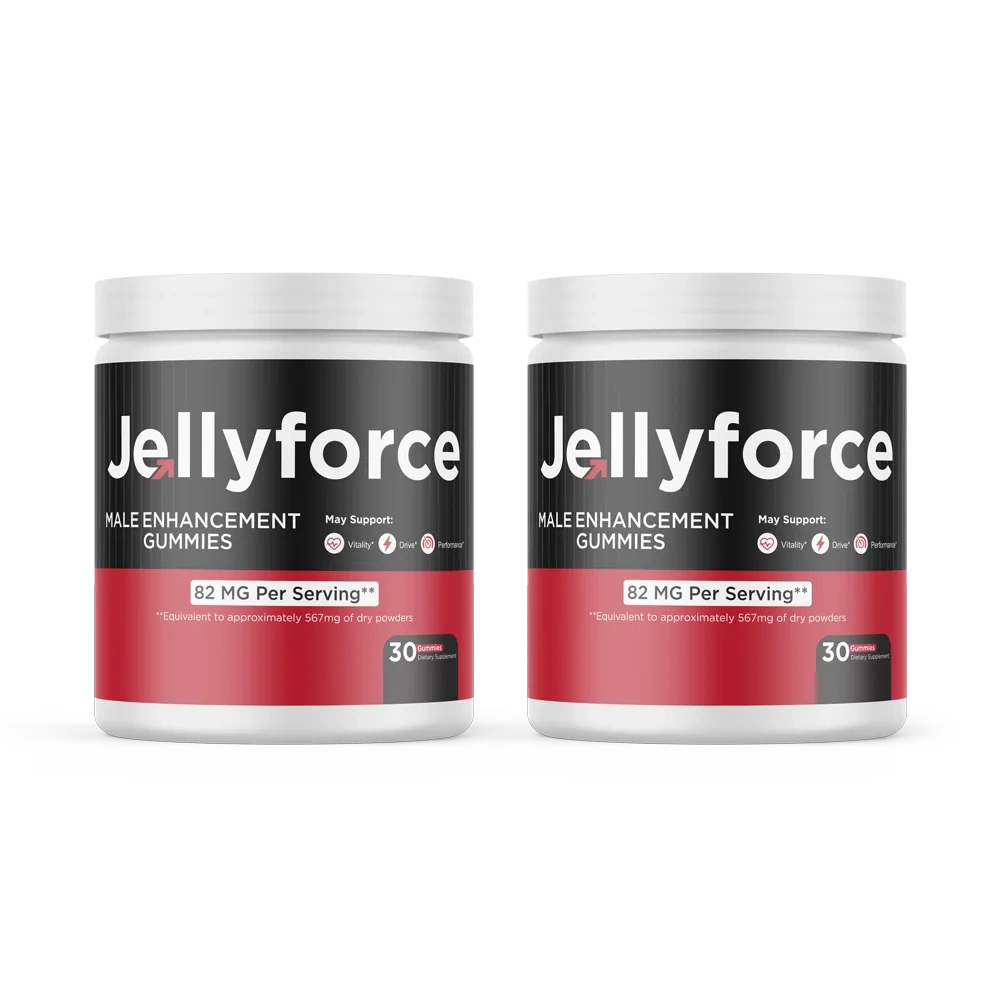
Maca is the second name on the Jelly Force label
It is the one with repeated placebo-controlled results behind it, at doses measured in grams. The panel prints an 82 mg blend for all nine names together, and the label page sets out exactly what that means.
From $158 for two bottles to $294 for six, with 60 days on all three
Choose A Jelly Force PackChewed, one a day, 30 to a bottle. Batch JEL-26/JE-2800, shipped from the United States.
What has been done since, and how it held up
Two further trials are worth knowing about. A 2009 randomised trial gave 2,400 mg a day of maca dry extract to fifty men with mild erectile dysfunction for twelve weeks. Both groups improved on the IIEF-5 questionnaire, as placebo groups in this field reliably do, but the maca group improved significantly more, and reported better physical and social wellbeing scores as well.
A 2023 trial in the World Journal of Mens Health took eighty men with symptoms of late-onset hypogonadism, dosed gelatinised maca three times a day for twelve weeks, and found improvements in the Aging Males Symptoms scale, the IIEF and the prostate symptom score against placebo.
Against that, the systematic review of the field is candid about what it is looking at: a small number of trials, small samples, and self-reported outcomes throughout. It calls the evidence limited, which is fair. It does not call it absent, which is also fair. And a 2024 network meta-analysis ranked the individual nutraceuticals in this space against each other precisely because the single-ingredient evidence is the only kind worth ranking.
The dose, which is the awkward part
Every trial above used grams.
Fifteen hundred milligrams. Two thousand four hundred. Three thousand. Those are the amounts that produced the results, and they are the amounts a person would have to take daily for twelve weeks to be doing what the participants did.
A Jelly Force gummy carries an 82 mg blend across nine names. Even reading the label at its most generous — the 567 mg dry-powder equivalent, all of it maca, which it plainly is not — the arithmetic does not close.
This is not a criticism unique to one bottle. It is the structural problem with putting a gram-scale botanical into a nine-name blend in a chewable format, and it applies to most of the shelf. The reason to state it on the page about maca specifically is that maca is the ingredient whose evidence would otherwise be doing the persuading.
- What maca has: three randomised placebo-controlled trials in men, all positive on self-reported outcomes.
- What maca does not have: a hormonal mechanism. Testosterone was measured and did not move.
- What the doses were: 1,500 to 3,000 mg a day, for twelve weeks.
- What a blend can realistically carry: a fraction of that, shared with eight other names.
- What follows: buying maca at a trial dose and buying a blend containing maca are two different purchases.
Gelatinised, raw, black or red: which maca was actually tested
Maca is not one ingredient, and this is the detail most labels quietly skip. The root comes in colour variants that are cultivated and sold separately, and it is processed in two quite different ways before it reaches a capsule or a gummy.
The processing difference is the larger one. Raw maca powder is dried root, ground. Gelatinised maca has been heated under pressure to break down the starch, which removes most of the fibre and is the traditional Andean preparation; it is easier to digest and more concentrated by weight. Both of the trials that built maca's modern reputation used gelatinised maca, and the 2023 trial in men with late-onset hypogonadism symptoms used it explicitly.
The colour variants — yellow, red and black — are grown as separate crops and have been compared in published work, with black maca most often studied where sperm parameters were the outcome. Yellow is the commonest and cheapest and is what most bulk powder is.
- What the trials used: gelatinised maca, at 1,500 to 3,000 mg a day.
- What most labels say: maca extract, or maca root, with no preparation named.
- What that means: a product naming neither the preparation nor the colour cannot be matched to any specific trial, even before the dose question.
- What this bottle prints: Maca Extract, with no preparation, no variant and no amount of its own.
None of that makes an unnamed preparation useless. It does mean a buyer cannot check, and it is one more reason this website sets the trial dose beside the name rather than implying the trial belongs to the bottle.
How to read a maca claim on any label
Three questions settle almost every one of them, and none takes longer than a minute.
- Does the label claim a hormonal effect? If it says raises testosterone, the trial it is leaning on measured testosterone and found no change. That is a claim contradicted by its own evidence.
- Is there a milligram figure for the maca specifically? Not a blend total. If there is no figure, the product cannot be compared with a trial and any comparison the marketing makes is unsupported.
- Does the figure reach 1,500 mg a day? If not, the label is naming maca rather than dosing it. That may still be a product worth buying for other reasons, but not for the reason the trials give.
Jelly Force's panel names maca second of nine and prints one total for the blend. So this website does not attribute the maca trial results to the gummy, and the ingredients page prints the trial dose beside every name for exactly that reason. The alternative — quoting a trial and leaving the dose out — is the commonest piece of dishonesty in this category.
Jelly Force is a dietary supplement, not a treatment for anything. A change in erectile function that arrives suddenly, or arrives alongside chest pain or leg pain on walking, can be the first visible sign of a vascular problem, and it is a reason to make an appointment rather than to start a gummy. The NIDDK page on erectile dysfunction sets out plainly what is treatable and how, and it takes about four minutes to read.
References
- Gonzales GF, Cordova A, Vega K, et al. Effect of Lepidium meyenii (MACA) on sexual desire and its absent relationship with serum testosterone levels in adult healthy men. Andrologia. 2002;34(6):367-72. Men aged 21-56 took 1,500 mg or 3,000 mg a day for twelve weeks; desire improved from week eight and testosterone did not move. PMID 12472620. https://pubmed.ncbi.nlm.nih.gov/12472620/
- Zenico T, Cicero AF, Valmorri L, et al. Subjective effects of Lepidium meyenii (Maca) extract on well-being and sexual performances in patients with mild erectile dysfunction: a randomised, double-blind clinical trial. Andrologia. 2009;41(2):95-9. Fifty men, 2,400 mg a day of dry extract for twelve weeks. PMID 19260845. https://pubmed.ncbi.nlm.nih.gov/19260845/
- Shin D, Jeon SH, Piao J, et al. Efficacy and Safety of Maca (Lepidium meyenii) in Patients with Symptoms of Late-Onset Hypogonadism: A Randomized, Double-Blind, Placebo-Controlled Clinical Trial. World J Mens Health. 2023;41(3):692-700. Eighty men, gelatinized maca dosed three times a day for twelve weeks. PMID 36593713. https://pubmed.ncbi.nlm.nih.gov/36593713/
- Shin BC, Lee MS, Yang EJ, et al. Maca (L. meyenii) for improving sexual function: a systematic review. BMC Complement Altern Med. 2010;10:44. Four trials, small samples, and the authors call the evidence limited. PMID 20691074. https://pubmed.ncbi.nlm.nih.gov/20691074/
- Barbonetti A, Tienforti D, Antolini F, et al. Nutraceutical interventions for erectile dysfunction: a systematic review and network meta-analysis. J Sex Med. 2024;21(11):1054-1063. Fifteen randomised trials, 1,000 men. PMID 39279185. https://pubmed.ncbi.nlm.nih.gov/39279185/